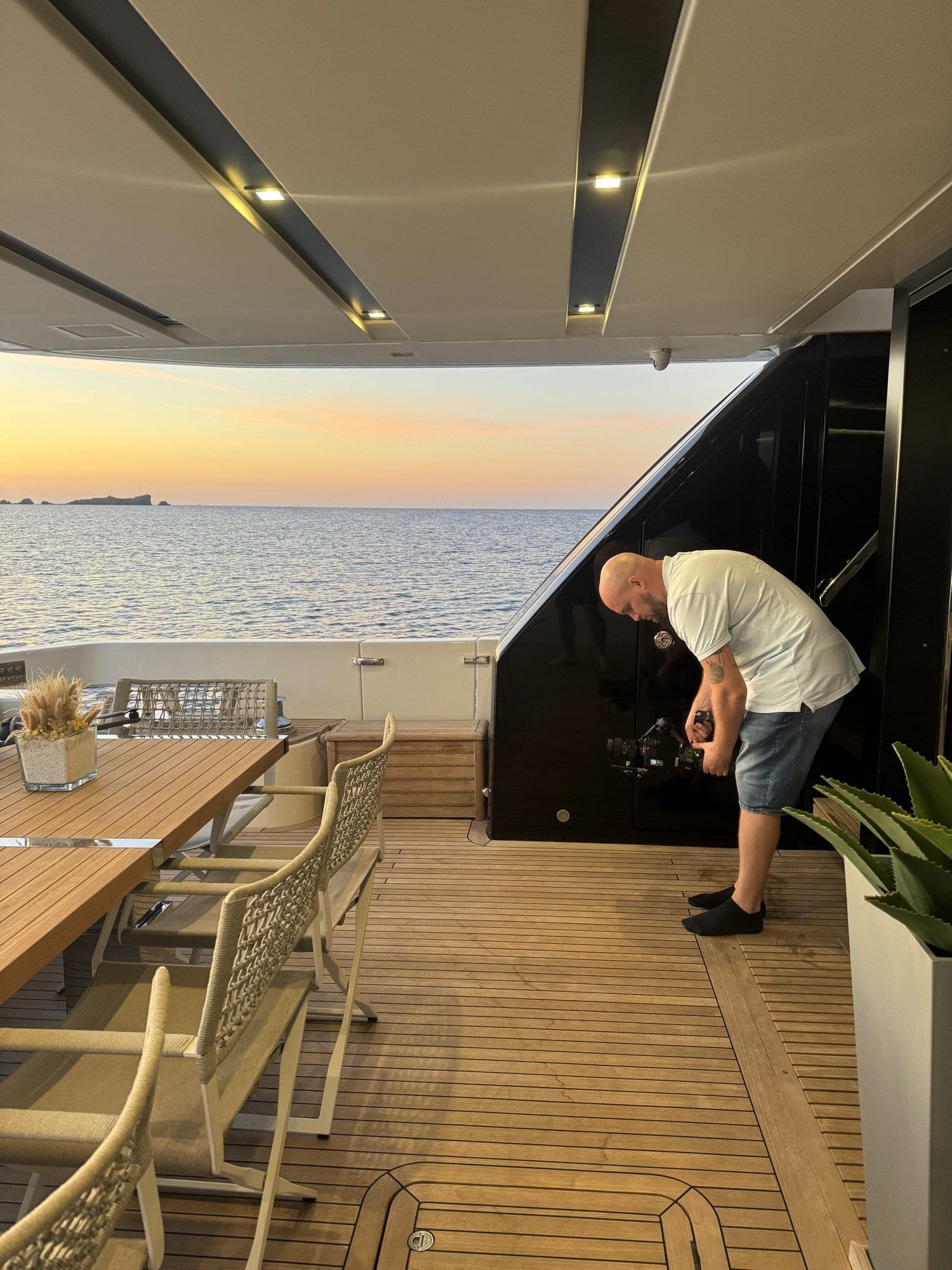
A yacht photo shoot is one of the few days in the season when every detail of the boat is recorded at full resolution, and those images then work for years: on the listing, in the charter brochure, on social media and in the press. What ends up in the frame is decided long before the photographer arrives.
Captains and crew have more influence on the result than anyone else on board. A well-prepared yacht saves hours of shooting and retouching, keeps the schedule on the right light, and gives the broker or charter manager images that show the boat as she really is. This checklist covers what we see make the biggest difference, from the brief to the last running shot.
Two weeks before: agree the brief
Everything starts with knowing what the images are for. A sales gallery puts the yacht first: clean exteriors, full rooms, the layout and the build quality. A charter shoot sells an experience, so it needs life on board: dining, water toys, guests on deck. Most shoots mix both, and it is worth agreeing the balance with the broker or manager before the day.
- Purpose of the shoot: sales listing, charter marketing, press or social media, or a mix.
- A shot list of the spaces and features that matter most: master suite, sundeck, beach club, tender garage, toys.
- Location: alongside, at anchor, or both, and which anchorage gives the best backdrop.
- A main date and a back-up date in case of wind or poor visibility.
- Who will be on board: models or guests for lifestyle images, and which crew members appear in uniform.
- Drone flights: check local rules and restricted zones around ports and airports with the media team.
The exterior: what the camera sees first
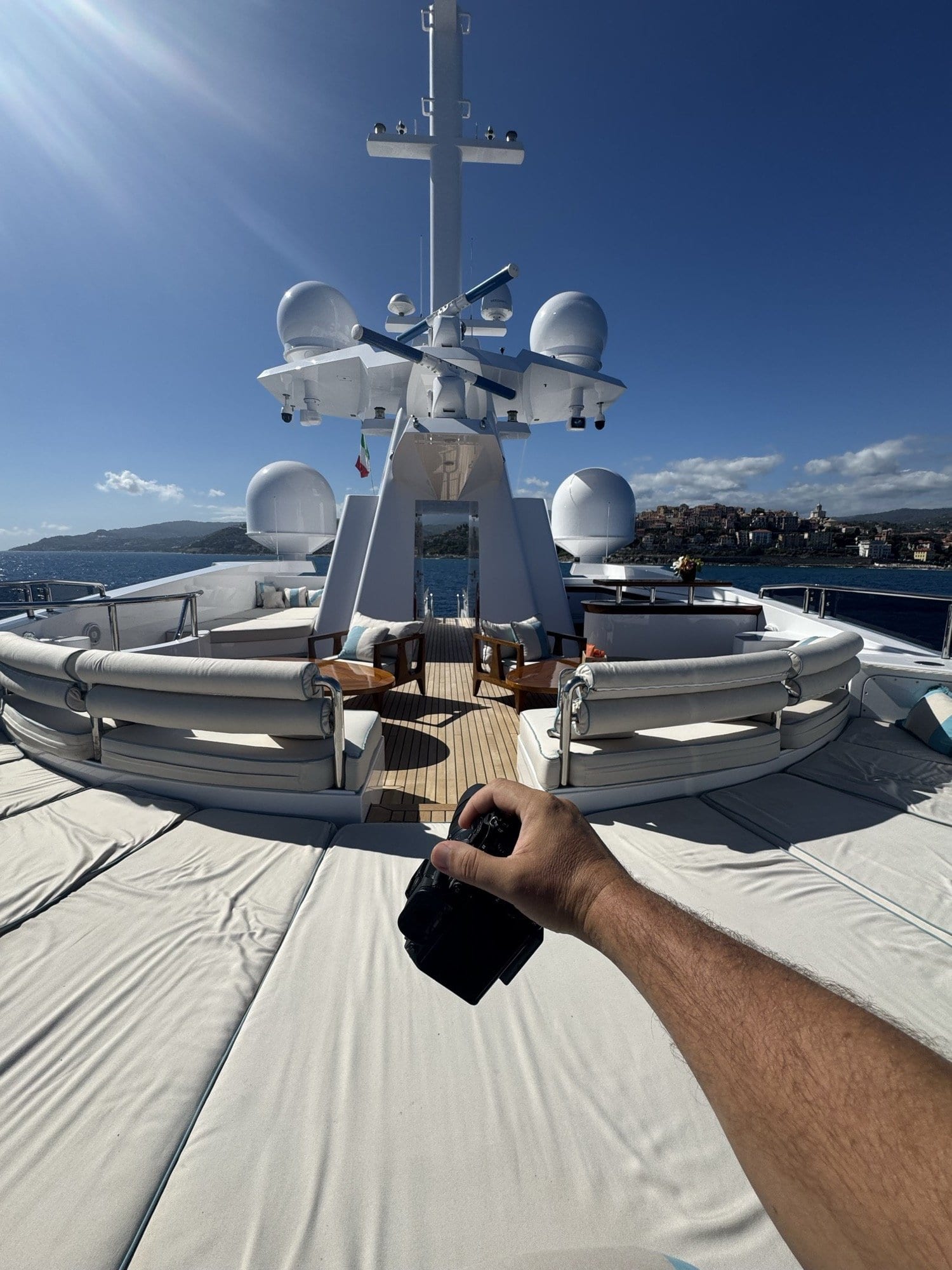
Exterior and aerial images are usually the first thing a buyer or charter client sees, and they are unforgiving. Salt spots on the hull, a stray fender or a cover left on a sunpad will show on a high-resolution file and cost time in retouching, if they can be fixed at all.
Plan the wash-down for the day before or early that morning, so the decks are dry and the teak has an even colour when shooting starts.
- Hull washed and chamoised, with attention to the waterline and exhaust areas.
- Stainless steel and glass polished, including windscreens and balcony glass.
- Fenders, lines, shore power cables and passerelle stowed for underway and at-anchor shots.
- Every cover removed: sunpads, helm stations, tenders, deck furniture.
- Teak scrubbed and dry, cushions clean and set straight.
- Flags clean and flown correctly, or taken down if they are faded.
- Tender and water toys washed, fuelled and ready to launch.
The interior: less is more
Interiors look larger, calmer and more expensive when they are empty of daily life. The goal is not to stage a hotel room but to let the design and the materials speak. A wide-angle lens also shows corners the eye tends to ignore, so the preparation has to be thorough.
- Personal items, crew belongings, chargers and paperwork out of sight.
- Every light working, with bulbs of the same colour temperature in each room.
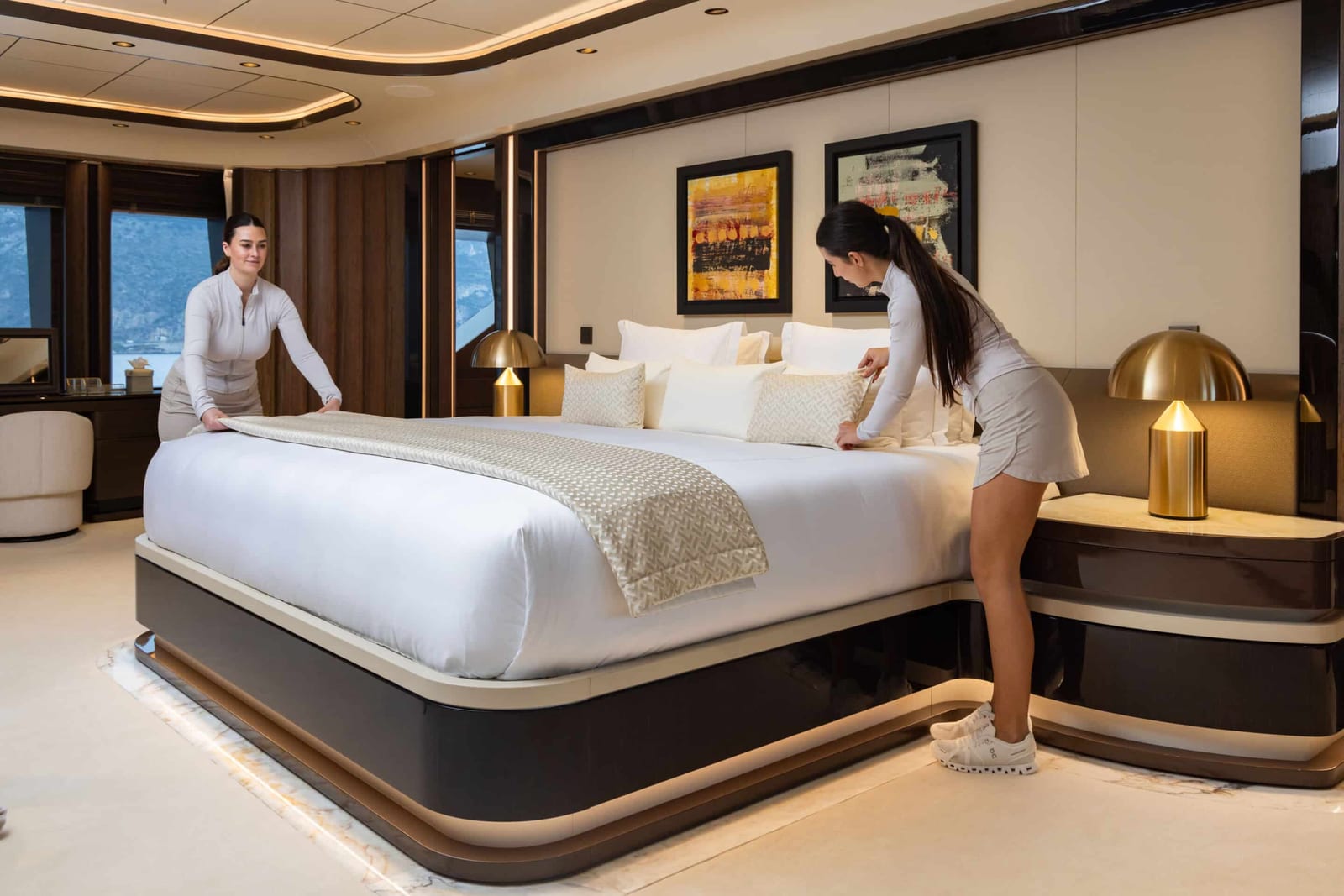
- Beds made with crisp linen, pillows and throws arranged simply.
- Bathrooms with fresh folded towels, taps and mirrors polished, toiletries removed.
- Blinds and curtains open to the same level in each room, screens switched off.
- Tables dressed only if the brief asks for it: a simple setting often works better than a full one.
Running shots and drone work
Underway images need the most coordination between the bridge and the media team. The captain sets the pace: heading, speed and turns decide whether the wake looks clean and whether the light falls on the right side of the hull.
Agree a radio channel, the tender driver who will carry the photographer, and a safe area with enough room for several passes. Calm water and a low sun give the best results, so running shots are usually planned early in the morning or late in the afternoon.
- A briefed tender driver and a VHF channel shared between bridge, tender and drone pilot.
- A clear sundeck area for drone take-off and landing, with loose items secured.
- Passes planned with the sun on the side of the hull being photographed.
- Crew on deck either out of view or in uniform, depending on the brief.
Build the day around the light
Light decides the schedule more than anything else. Exteriors and aerials look best in the soft, low light after sunrise and before sunset; interiors are easier in the middle of the day, when the light outside the windows is even and does not overpower the rooms.
A typical day therefore starts with exteriors or running shots, moves inside during the harsh hours, and returns outside for lifestyle images and the golden hour. Build in time for the crew's own work, a meal break, and moving the yacht between locations if needed.
On the day: the final walk-through
An hour before shooting starts, walk the yacht with the photographer or producer. It is the fastest way to catch the details that are easy to miss when you live on board every day.
- Decks dry, cushions straight, covers off.
- Fenders and lines stowed when the yacht is not alongside.
- All interior lights on and blinds set.
- No bags, shoes or cleaning products in view.
- Tender and toys ready, crew uniforms clean.
- Bridge, tender and drone pilot on the same radio channel.
After the shoot
Once the images are delivered, share them with the broker or manager in organised folders so they can go straight onto the listing platforms. Keep a note of what worked, which anchorage gave the best backdrop and how long each part took: it makes the next shoot on the same yacht faster and better.
Good preparation is not about perfection; it is about giving the yacht the time and attention her quality deserves, so the images can do their job for years.