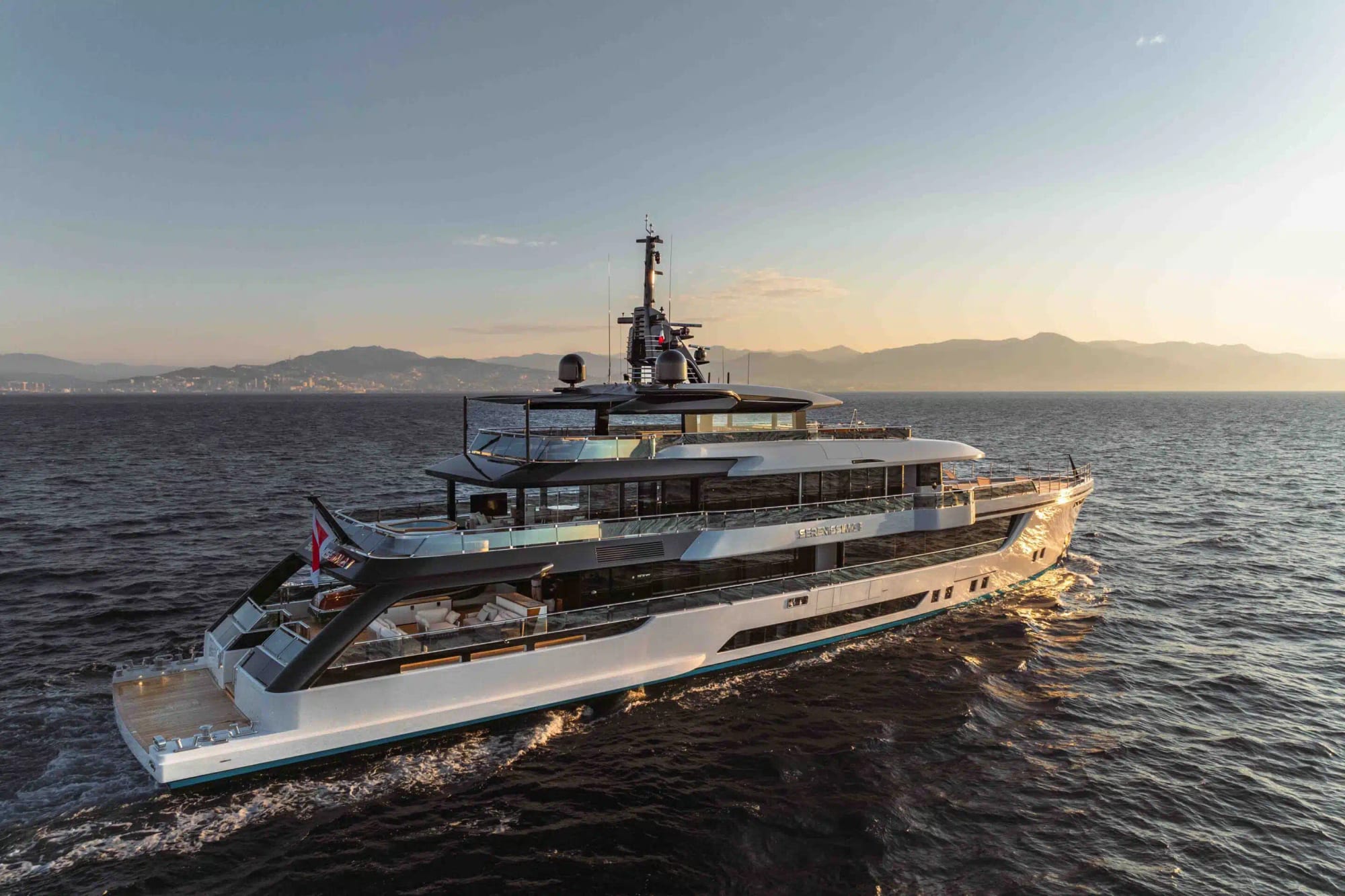
Photography literally means drawing with light, and few subjects make that as obvious as a yacht. White superstructures, dark glass, polished steel and moving water all react to light in different ways, often in the same frame. When the light is right, the lines of the yacht read clearly, the materials look like what they are and the sea becomes part of the picture. When it is wrong, the hull turns into a flat white shape and the water into glare.
That is why so much of yacht photography happens before the shutter is pressed: reading the sun, the sky and the sea, and putting the yacht in the right place at the right time. This is how we think about light on a shoot, and what it means for anyone planning one.
A difficult subject to light
A yacht combines some of the hardest surfaces to photograph. Gloss white paint reflects almost everything; tinted windows and dark hulls absorb it. In strong sunshine the difference between the brightest and the darkest parts of the yacht can exceed what a camera sensor records in a single exposure, so either the superstructure burns out or the shadows under the overhangs go black.
Water adds another layer. It mirrors the sky, so its colour and texture change with every cloud, every breath of wind and every angle of the sun. The right light keeps all of this under control; the wrong light makes it a fight in post-production that is rarely won completely.
Golden hour: when the lines come alive
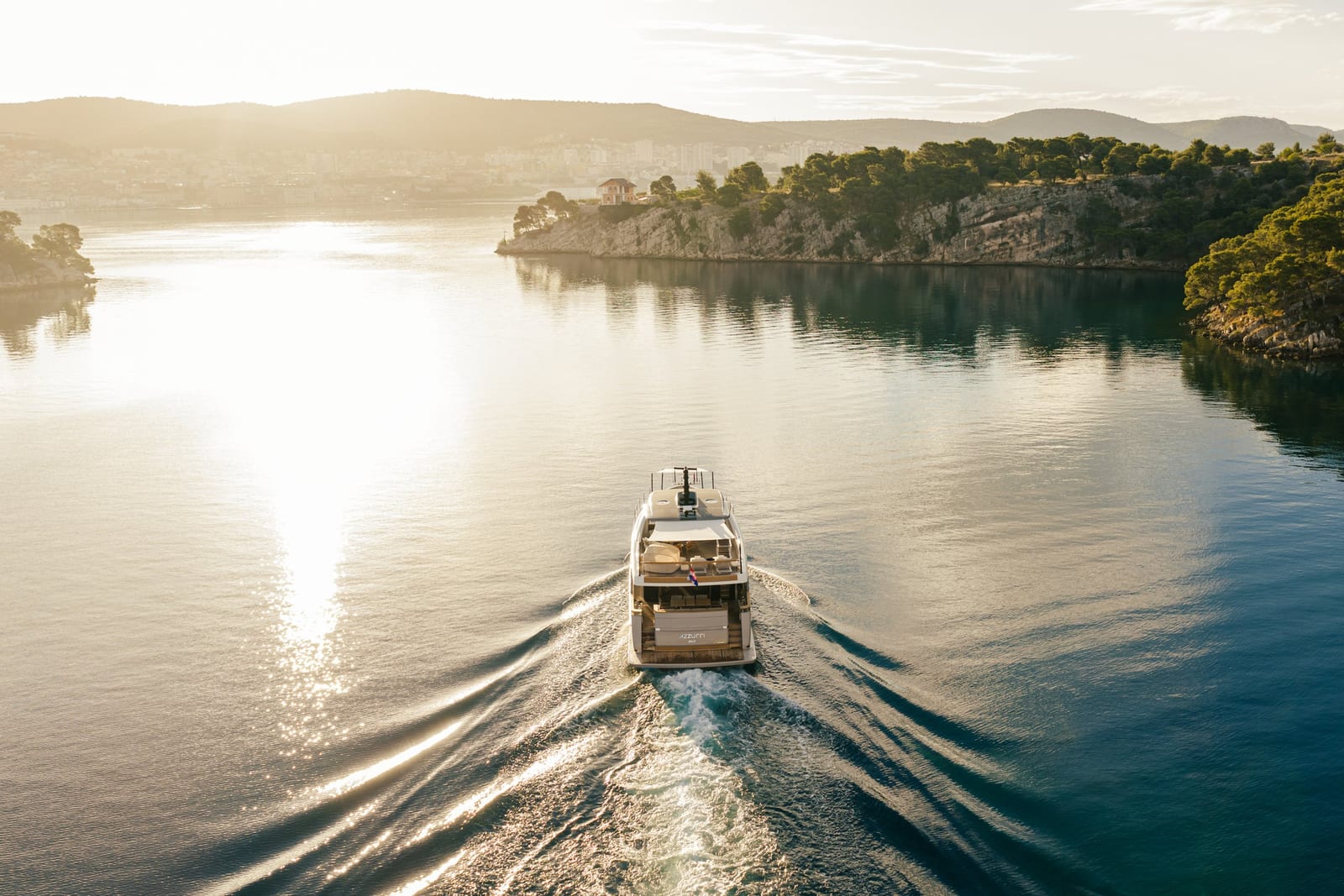
The hour after sunrise and the hour before sunset are the reason photographers get up early and stay out late. The sun sits low, its light travels through more atmosphere and becomes softer and warmer. Shadows lengthen and fall across the hull, which reveals the sheer line, the steps of the decks and the shape of the superstructure instead of flattening them.
Low light also changes the sea. The surface picks up the colour of the sky, reflections stretch out and the wake catches the sun. It is the time we keep for hero exteriors and running shots, the images that open a listing or a charter brochure.
Blue hour: the yacht lights up
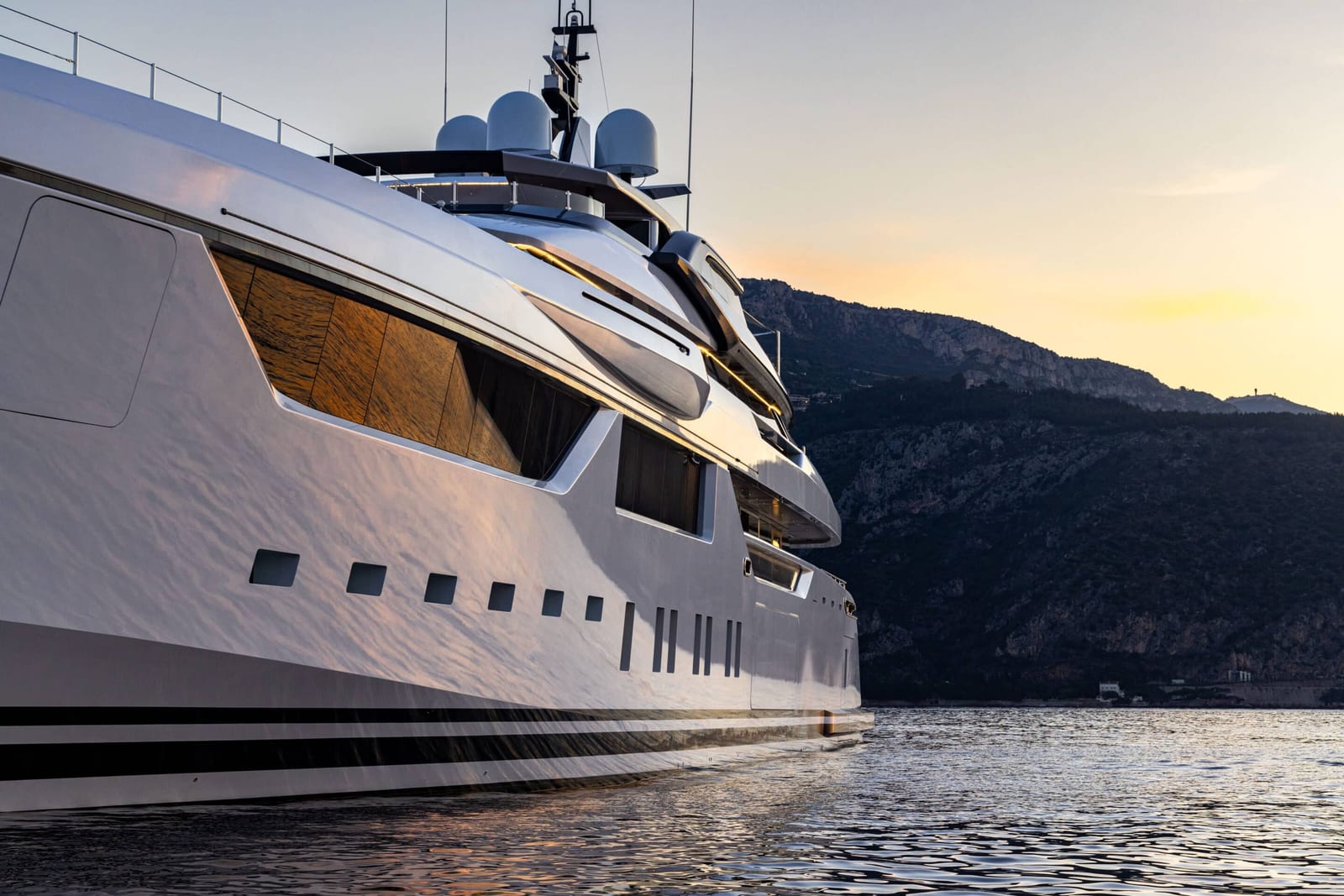
Just after sunset, the sky keeps a deep blue glow for a short time while the land and sea darken. If the yacht's interior, deck and underwater lights are switched on at that moment, the balance between inside and outside becomes almost perfect: the yacht glows against the blue, and every window shows the life of the interior.
Twilight images take preparation. The window lasts only a few minutes, every light on board has to work and be on, and the yacht has to be in position before the sky starts to change. When it works, it is often the most memorable image of the whole shoot.
Midday is not wasted time
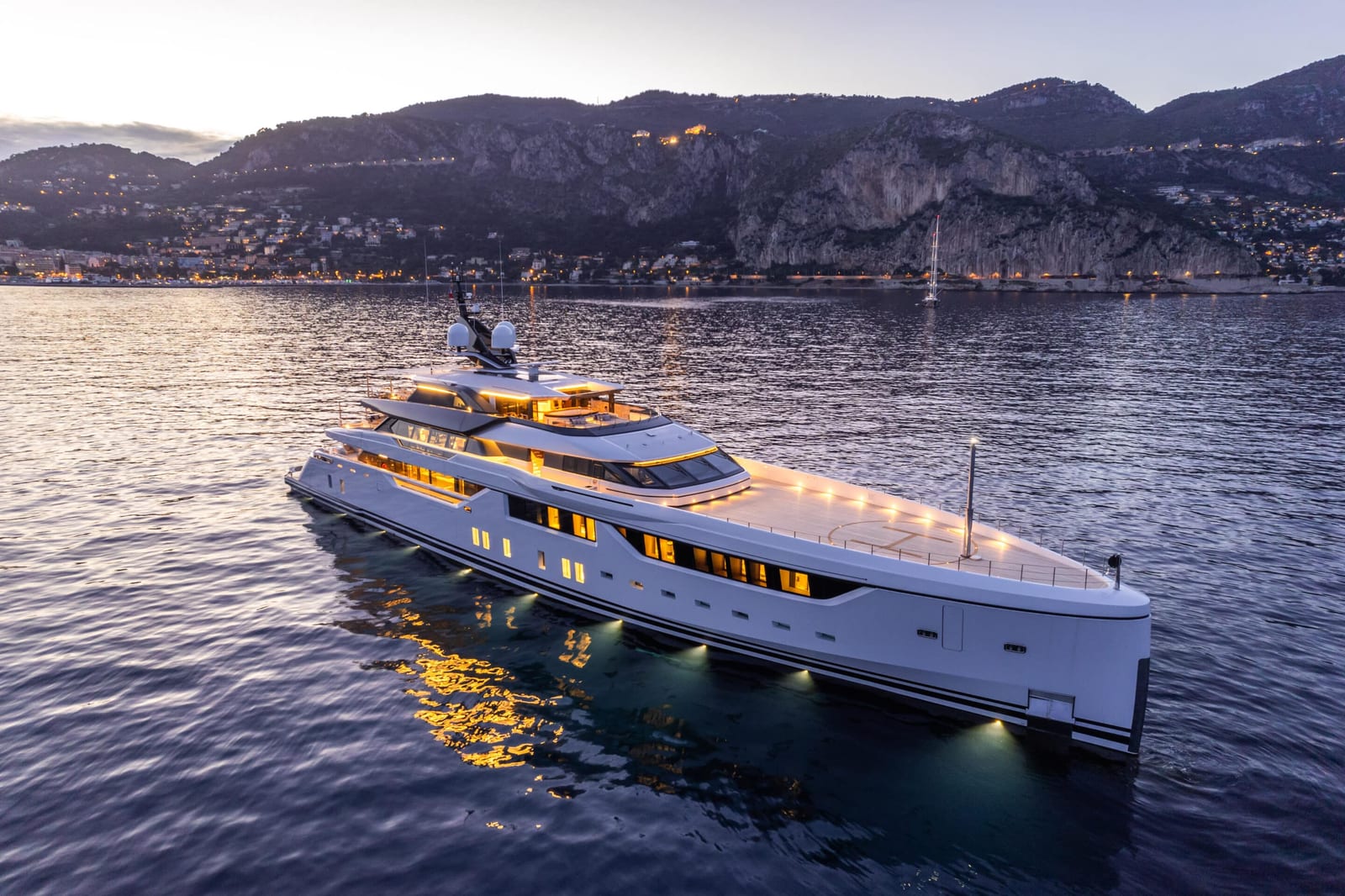
Harsh overhead sun is the hardest light for exteriors taken from sea level, but it has its uses. From the air, a high sun lights the sea straight down, which brings out the turquoise of shallow water and the deep blue offshore. Top-down drone images of a yacht on clear water are often best in the middle of the day.
The middle of the day is also the natural time for interiors. With the sun high, the light coming through the windows is more even, and it is easier to balance the view outside with the rooms inside without one overpowering the other.
Where the sun sits relative to the yacht
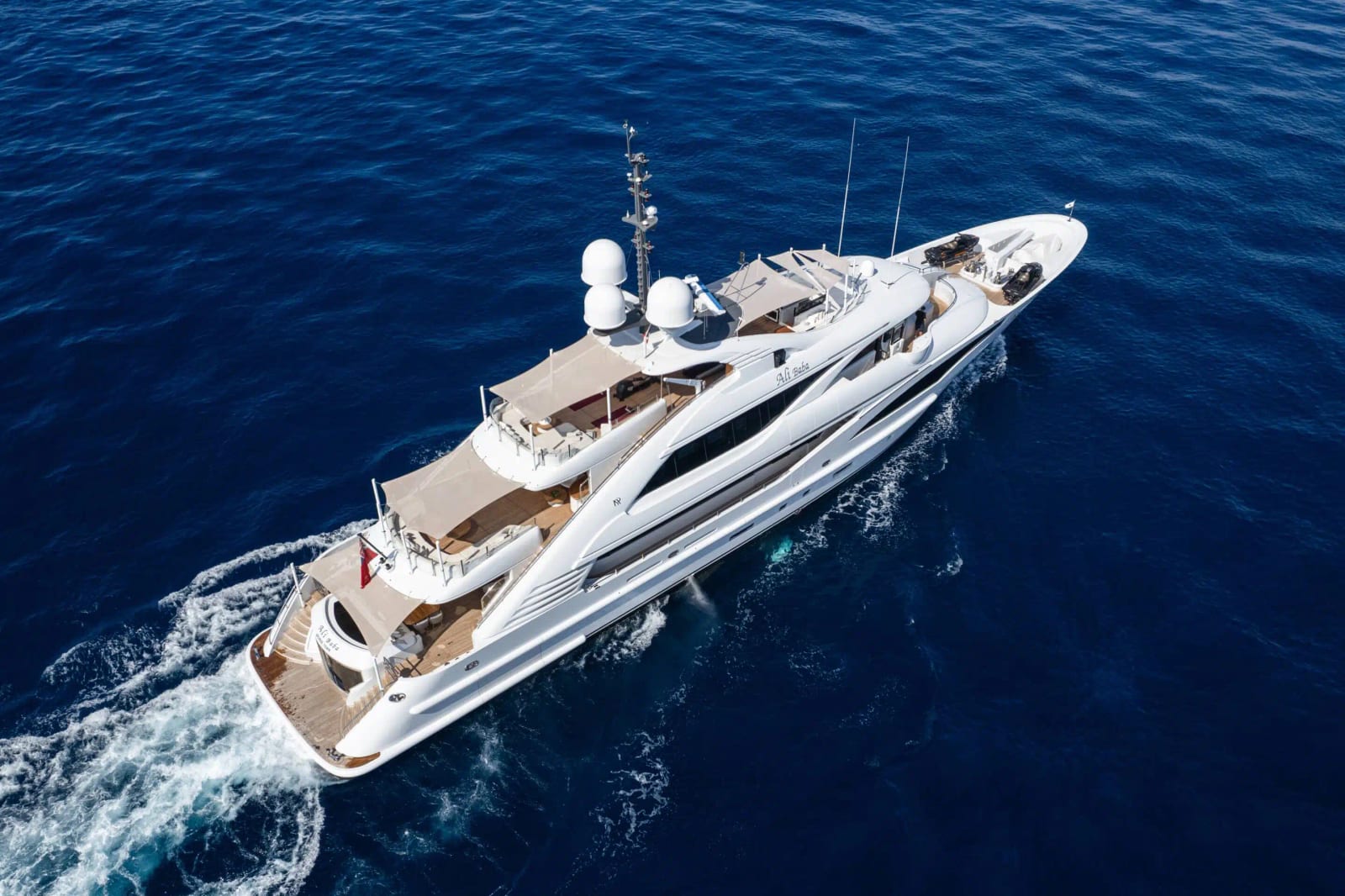
Time of day is only half of the story; direction matters just as much. For most running shots, the sun works best behind or beside the camera, lighting the side of the hull being photographed. Light from the side gives texture and depth. Light from behind the yacht creates silhouettes, glowing water and a strong mood, which suits lifestyle and brand images more than a sales gallery.
This is why the bridge and the media team agree headings before each pass. A turn of a few degrees can change a flat image into one with depth, and it costs nothing but a little coordination.
Weather, haze and the season
A clear blue sky is not always the best sky. Light cloud acts as a giant diffuser and softens contrast on white surfaces, while a scattering of clouds gives the sky some shape. Summer haze, on the other hand, can flatten distant coastlines in the middle of the day, and wind makes the sea choppy and breaks up reflections.
Season plays its part too. In much of the Mediterranean, late spring and early autumn tend to give softer light and calmer conditions than the height of summer. Wherever the yacht is, a back-up date and some flexibility in the schedule are the best protection for the result.
Planning a day around the light
Put together, these principles give a shoot day its shape. The details change with the location, the season and the brief, but the logic stays the same:
- Sunrise and early morning: running shots and aerials in low, soft light on calm water.
- Morning at anchor: exteriors while the sun is still at an angle.
- Middle of the day: interiors, plus top-down aerials over clear water.
- Late afternoon: lifestyle, dining and water toys in warm light.
- Golden hour: hero exteriors and the key running passes.
- Blue hour: twilight images with every light on board switched on.
Light is where quality starts
Retouching can remove a fender or clean a reflection, but it cannot move the sun. The difference between a good yacht photograph and a remarkable one is usually made by waiting for the right light and being in the right place when it arrives. That patience is part of the work, and it shows in every image a broker, a yacht manager or a shipyard puts in front of their clients.